
HVAC Repair in Ypsilanti and Southeast Michigan
One owner-operated shop for the furnace, the air conditioner, the heat pump, the thermostat and the ducts that connect them. Diagnosed properly, quoted flat-rate, fixed on the first trip whenever the part is on the truck.
Most of the calls that come into Temprasure do not start with a diagnosis. They start with a description: the house is 62 degrees and the furnace is clicking, the upstairs is sweltering while the thermostat says 72, the blower runs all night and never shuts off, the system cuts out every time it rains. The homeowner does not know whether that is a furnace problem, an AC problem, a thermostat problem or a duct problem, and they should not have to. HVAC repair is the service for the whole system, and it is most of what we do between the first cold night in October and the last humid week in September. Al takes the call, asks the questions that narrow it down, and shows up with the truck stocked for all of it.
A Southeast Michigan house usually has four pieces of equipment working as one system: a gas furnace in the basement, an evaporator coil sitting on top of it, a condenser on a pad outside, and a thermostat on the wall telling all of it what to do. In newer subdivisions around Canton, Saline and Pittsfield Township there may be a heat pump in place of the condenser or a zoning board splitting the ducts. In a 1950s ranch in Westland or Garden City the furnace may be the third one in that spot while the ductwork is original. We repair every part of that chain, on every brand, and we spend as much time looking at how the parts talk to each other as we do at any single component. A furnace that locks out on high limit is often an airflow problem, and an airflow problem is often a duct or filter problem, not a furnace problem.
What a repair visit from Temprasure looks like is consistent regardless of which piece failed. We pull the service history if we have it, verify what the thermostat is calling for, check the low-voltage wiring and the transformer, test the control board for stored fault codes, and then go to the equipment with a meter and gauges. On the heating side that means flame sensor microamps, inducer pressure, gas valve voltage and a combustion check. On the cooling side it means capacitor microfarads, contactor condition, refrigerant pressures with superheat and subcooling, and a temperature split across the coil. Only after that do we quote, and the quote is one flat number for the whole repair that you approve before a tool comes out of the bag. The dispatch fee that got us there is credited toward that repair.
The reason people in Ypsilanti and Ann Arbor keep recommending us is not that we are the biggest shop in Washtenaw County, because we are not. It is that we show up when we say we will, including New Year's Eve and the middle of a July heat wave, and that we tell people when a repair is the wrong move. We have talked homeowners out of furnace replacements that a larger company had already quoted, and we have told others plainly that a 20-year-old R-22 system with a leaking coil is past the point where a repair makes sense. The price you are quoted is the price you pay, and nights, weekends and holidays are billed at the same rate as a Tuesday.
If your system is down right now, the fastest route is to call. If it is limping along and you are trying to decide whether to repair or replace, the rest of this page and the linked guides will help you understand what we look for and how we decide. Either way, the first visit is a diagnosis, not a sales pitch.
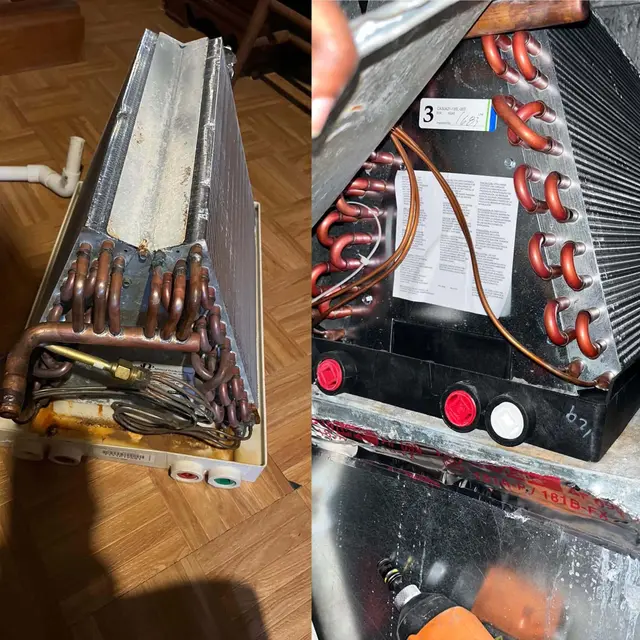
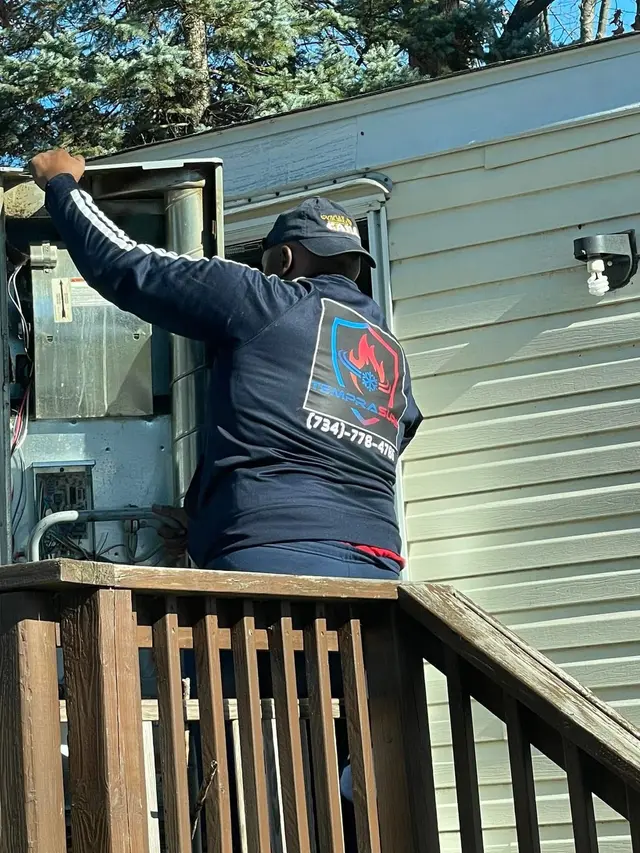
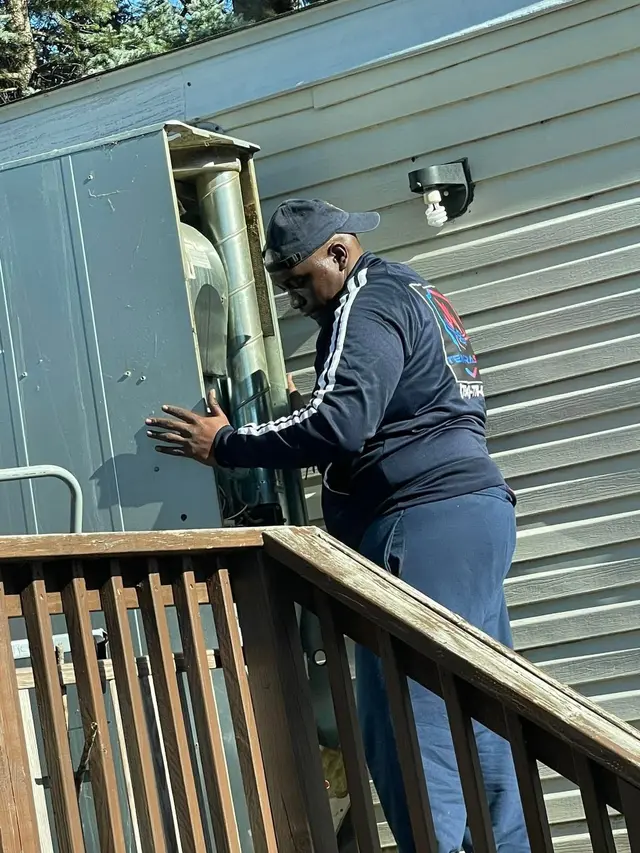
HVAC Repair work we have photographed
Signs it is time to call
Furnace runs but the house never warms up
The burners light, the blower runs, and the thermostat setpoint never arrives. Usually a dirty filter choking airflow, a furnace cycling on its high limit, a stuck zone damper or a duct that has come apart in the basement.
System clicks, hums or buzzes but does not start
A furnace clicking without ignition points to the ignitor, flame sensor or pressure switch. A condenser humming without the fan spinning is almost always a capacitor or contactor. Both are first-visit repairs.
Thermostat is blank or unresponsive
A dead thermostat is often a blown low-voltage fuse on the furnace control board, a tripped float switch on the AC drain, or a shorted wire where it passes through a basement joist. Replacing the thermostat rarely fixes it.
Rooms are hot upstairs and cold downstairs
Two-story colonials from the 1970s through the 2000s suffer this almost universally. Causes include undersized returns, uninsulated attic ducts, a blower running on the wrong speed tap or a closed damper nobody remembers.
Blower runs constantly or will not shut off
A stuck fan relay, a thermostat set to ON instead of AUTO, or a furnace that overheated and tripped the limit and is now purging. Constant blower operation on a cold coil also makes the house feel clammy.
Utility bill is suddenly higher for the same weather
DTE bills that jump without a rate change usually point to a system running longer to do the same work: a failing capacitor, low refrigerant, a cracked heat exchanger cell or ducts leaking into the crawlspace.
Strange smells when the system kicks on
Burning dust on the first furnace run of fall is normal for ten minutes. A persistent electrical smell, a sweet chemical smell near the coil, or the odor of gas or exhaust is not. Shut the system off and call.
Water or ice where it should not be
Water on the basement floor near the furnace in summer means a clogged condensate line or cracked pan. Frost on the copper lines means airflow or refrigerant trouble. Both need a visit before they damage something expensive.
How the visit goes
Describe the symptom, get a real window
Tell us what the system is doing, what it did last, and whether anyone has worked on it recently. We tell you whether to shut it down, and give you an arrival window we actually hit.
Trace the call from the thermostat down
We confirm what the thermostat is asking for, check the 24-volt circuit and the control board fault history, and only then open the equipment. A lot of repairs are solved in the first fifteen minutes this way.
Test the equipment with instruments
Combustion readings, flame sensor microamps, static pressure, capacitor values, refrigerant pressures and amp draw. We measure instead of guessing so the part we replace is the part that failed.
Show you, then quote one number
You see the burned contactor or the cracked ignitor and hear what it will cost as a single flat rate. The dispatch fee is credited toward the repair when you say yes.
Fix it from the truck
Ignitors, flame sensors, pressure switches, capacitors, contactors, motors, relays, transformers, thermostats and drain parts ride with us. Most HVAC repairs are finished the same visit.
Run it, verify it, explain it
A full heating or cooling cycle with readings taken at the end, a quick look at whatever else is near the end of its life, and plain advice about what to budget for and when.
What this covers
- Furnace ignition, flame sensor, pressure switch and limit switch repair
- Inducer motor, blower motor and ECM module replacement
- Control board, transformer, relay and low-voltage fuse replacement
- AC capacitor, contactor and condenser fan motor replacement
- Refrigerant leak search and recharge on R-410A, R-454B and remaining R-22 systems
- Heat pump reversing valve, defrost board and outdoor sensor repair
- Thermostat diagnosis, rewiring and replacement, including smart thermostat C-wire fixes
- Condensate drain, pump and float switch repair
- Gas valve and combustion safety checks with a combustion analyzer
- Zone damper, zone board and bypass damper repair
- Duct reconnection and sealing when a separated run is the cause of the complaint
- Carbon monoxide check at the registers on every furnace repair
- Manufacturer warranty lookup before any major part is quoted
How pricing works
Every HVAC repair starts with a flat dispatch fee that pays for the trip and a full diagnosis of whatever is wrong, whether that turns out to be the furnace, the air conditioner, the thermostat or the ductwork. When you approve the repair, that fee is credited toward the job. The repair itself is quoted as one flat rate from our price book, so an ignitor is one number, a blower motor is another, and the number does not change if the job runs long or we have to go back to the truck twice.
Small electrical and control repairs are the least expensive calls we run and are usually done inside an hour. Motors, boards, coils and refrigerant work cost more and depend on the equipment. When a repair gets close to the cost of a new piece of equipment, especially on a system older than 15 years, we lay both options out side by side and let you decide, and the estimate for the replacement is free.
We do not add a surcharge for nights, weekends or holidays. A furnace that quits at 2 a.m. in January is repaired at the same flat rate as one that quits on a weekday afternoon.
From the people we have helped
★★★★★Temprasure is one of the best-managed companies I've ever come into contact with. Not only did Al do a great job but he did so in a timely manner. He worked as if it was his home in need. I would recommend him to anyone who has heating and cooling needs.
★★★★★Al & Co. came out and took very good care of me and my family. He showed up within an hour of me making contact and was able to diagnose and take care of the problem quickly and for reasonable pricing.
★★★★★Al is very polite and professional. Is willing to answer any questions you may have. I would recommend Temprasure to 10/10 people looking for HVAC work.
Questions we hear most
What is the difference between HVAC repair and furnace or AC repair?
Nothing in how we work. HVAC repair is the catch-all for a system problem when you do not yet know which component failed. We diagnose the whole chain from the thermostat to the registers and fix whatever is actually broken, whether that is the furnace, the condenser, the coil, the thermostat or a duct.
Do you repair every brand?
Yes. Carrier, Bryant, Lennox, Trane, American Standard, Goodman, Amana, Rheem, Ruud, York, Payne, Armstrong, Comfortmaker, Ducane and the older Sears and Kenmore equipment still running in a lot of Westland and Ypsilanti basements. Residential components are largely universal and we stock the ones that fail.
How quickly can you get here?
Most repair calls inside our 20-mile radius of 48197 are seen the same day. No-heat calls in winter and no-cooling calls in summer go to the front of the line. We are open 24 hours, and the person who answers is the person who comes out.
Is there a charge for the diagnosis?
Yes, a flat dispatch fee covers the trip and the diagnosis. If you approve the repair, that fee is applied to the work. If you decide not to repair, you pay only the dispatch fee and you leave with a written explanation of what is wrong.
Should I shut the system off while I wait?
If you smell gas, see ice on the refrigerant lines, hear a loud grinding or notice a burning smell that does not go away, yes. If the furnace is simply not lighting or the AC is blowing room-temperature air with no other symptom, leaving the thermostat on will not hurt anything.
My thermostat is blank. Do I need a new one?
Probably not. A blank thermostat is usually a lost 24-volt supply: a blown fuse on the furnace board, a tripped float switch under the coil, or a chewed wire. We check the supply before we replace anything, because a new thermostat on a dead circuit stays blank.
Can you fix uneven temperatures between floors?
Often, yes. We measure static pressure and airflow at the registers, check blower speed settings, look for closed or broken dampers and inspect the attic and basement runs for leaks. Sometimes the fix is a blower tap and a damper adjustment; sometimes it is a duct repair. We tell you which before we start.
Do you work on heat pumps and dual-fuel systems?
Yes. The heat pumps going into Washtenaw County homes since the mid-2010s share their outdoor components with central air, and the defrost boards, reversing valves and sensors are familiar. On dual-fuel setups we verify the balance point and the changeover to the gas furnace is set correctly for a Michigan winter.
How do I know you will not just tell me to replace it?
Ask the people who left our reviews. We have talked homeowners out of furnace replacements that another company already quoted, and we encourage second opinions. Replacement only comes up when the repair cost, the age of the equipment and the refrigerant or parts situation all point the same direction, and even then we show you both numbers.
Do you pull permits for repairs?
Component repairs do not require a permit in Washtenaw or Wayne County. Replacing a furnace, condenser, coil or water heater does, and we pull it and schedule the inspection ourselves when a repair turns into a replacement.
HVAC Repair near you
Local pages for each community we serve, with the housing and equipment details that matter there.
- HVAC Repair in Ypsilanti
- HVAC Repair in Ypsilanti Township
- HVAC Repair in Ann Arbor
- HVAC Repair in Pittsfield Township
- HVAC Repair in Superior Township
- HVAC Repair in Saline
- HVAC Repair in Dexter
- HVAC Repair in Chelsea
- HVAC Repair in Milan
- HVAC Repair in Scio Township
- HVAC Repair in Ann Arbor Township
- HVAC Repair in Lodi Township
- HVAC Repair in York Township
- HVAC Repair in Augusta Township
- HVAC Repair in Whittaker
- HVAC Repair in Willis
- HVAC Repair in Salem Township
- HVAC Repair in Whitmore Lake
- HVAC Repair in Canton
- HVAC Repair in Belleville
- HVAC Repair in Van Buren Township
- HVAC Repair in Sumpter Township
- HVAC Repair in Romulus
- HVAC Repair in Westland
- HVAC Repair in Wayne
- HVAC Repair in Inkster
- HVAC Repair in Garden City
- HVAC Repair in Plymouth
- HVAC Repair in Plymouth Township
- HVAC Repair in Northville
- HVAC Repair in Livonia
- HVAC Repair in New Boston
- HVAC Repair in Dundee
- HVAC Repair in South Lyon
Related services
Read before you call
- Furnace Not Turning On? A Step-by-Step Troubleshooting Guide
- AC Not Cooling? What to Check First Before You Call
- Thermostat Not Working? How to Tell If It's the Thermostat or the Furnace
- The HVAC Service Call Fee Explained: What It Covers and What It Should Not
- Upstairs Hot, Downstairs Cold: Fixing Uneven Temperatures in a Michigan Two-Story
HVAC Repair, done right the first visit
Call or text (313) 701-9471 and tell us what the system is doing. We'll give you a real arrival window and a flat-rate quote before any work starts.