
Furnace Repair in Ypsilanti and Southeast Michigan
Furnace won't light, blows cold, short cycles or quit in the middle of a January night? Diagnosed with a meter and a manometer, repaired at a flat rate, usually the same day.
A gas furnace in Southeast Michigan runs for about seven months of the year and logs well over 6,000 heating degree days doing it, which means the parts that wear out do so in a predictable order. Hot-surface ignitors crack after a few thousand cycles. Flame sensors coat over with a layer of oxide and the furnace lights, runs four seconds and shuts down. Inducer motors lose their bearings and scream. Pressure switches stick when a condensate trap clogs or a vent fills with ice. Blower motors and their capacitors give out. Control boards fail from power surges. Temprasure has repaired every one of these on every brand of furnace in Washtenaw and western Wayne County, and the truck carries the ignitors, sensors, switches, capacitors, motors and boards that cover the great majority of calls.
We work on 80 percent and 90-plus percent furnaces alike: the single-stage Carrier, Bryant, Lennox, Trane, Goodman, Amana, Rheem, Ruud, York, Payne, Armstrong, Comfortmaker and Tempstar units in most basements around here, the two-stage and variable-speed models in newer subdivisions, and the older standing-pilot furnaces still heating a surprising number of 1950s ranches in Westland and Ypsilanti Township. The diagnosis is the same regardless of the nameplate. We read the diagnostic LED, check gas pressure with a manometer, test the ignitor's resistance, read the flame sensor's microamps, confirm the inducer is pulling the pressure switch closed, measure static pressure and temperature rise across the heat exchanger, and look at the exchanger itself for cracks and rust-through.
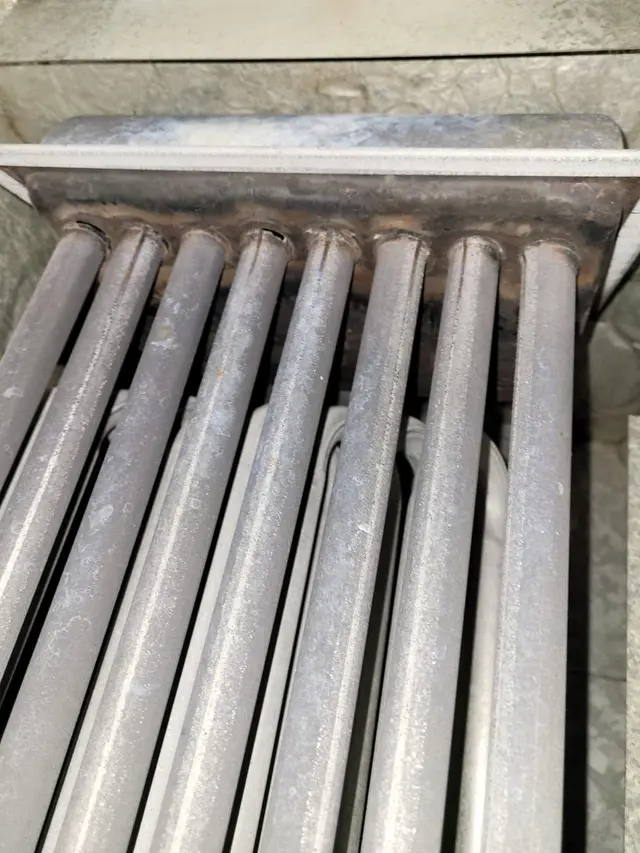
That last step matters more than any other. A cracked heat exchanger on an aging furnace lets flue gases, including carbon monoxide, into the air the blower is pushing through the house. On furnaces past about 20 years, especially 80 percent units that have run with a restricted filter for years, it is common enough that we inspect for it on every repair visit, not just when the CO alarm goes off. If we find a crack, we show it to you, and the repair conversation becomes a replacement conversation, because a new heat exchanger on an old furnace rarely makes financial sense. If the exchanger is sound, we fix whatever actually failed and tell you so.
Our reviews are full of two things: same-day service when other shops quoted a week, and honest repair-over-replace calls. Al has told more than one homeowner that the furnace another company condemned needed a flame sensor cleaning and a new ignitor, not a new furnace, and we are not shy about encouraging a second opinion on any replacement quote, including our own. Repairs are quoted as a flat rate before the work starts, the dispatch fee that covers the trip and diagnosis is credited toward the repair, and nights, weekends and holidays are billed at the same rate as a weekday morning. We are open 24 hours because furnaces do not fail at convenient times.
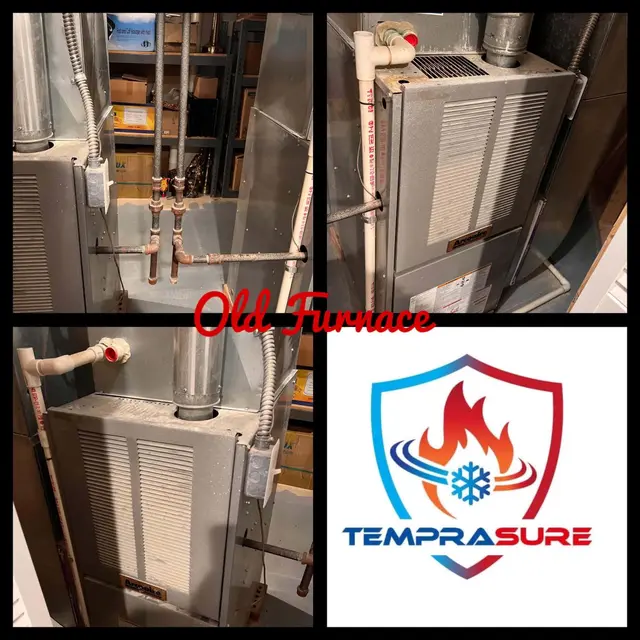
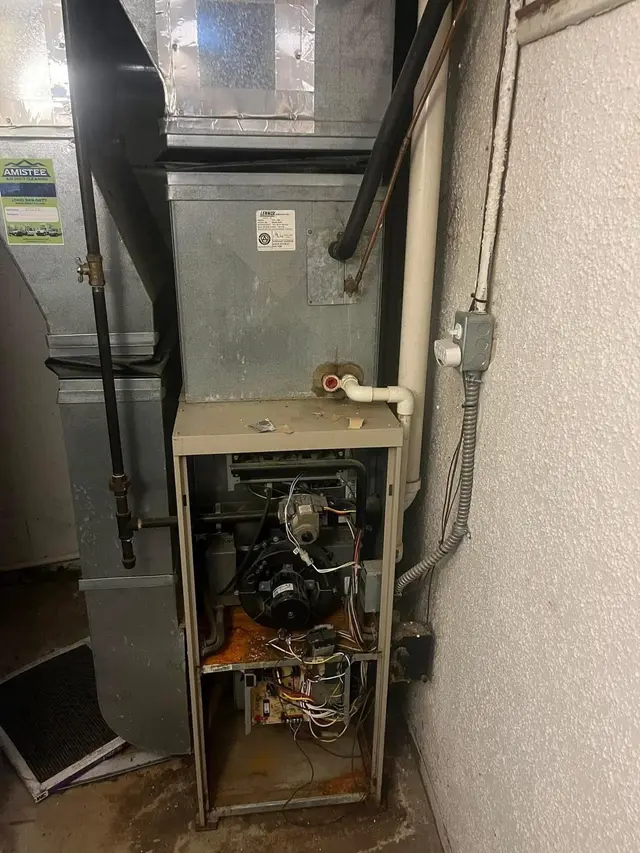
Furnace Repair work we have photographed
Signs it is time to call
No heat at all
The thermostat calls, nothing happens. Could be a tripped safety, a dead control board, a failed inducer or a blown fuse on the board. Check the switch on the side of the furnace and the breaker before you call, then call.
Lights, runs a few seconds, shuts off
The classic dirty flame sensor. The burners ignite, the sensor cannot prove flame through its oxide coating, and the board shuts the gas off. Three tries and it locks out.
Clicking but no ignition
The gas valve clicks or the ignitor glows and the burners never light, or the ignitor never glows at all. Usually a cracked hot-surface ignitor, a failed gas valve or a pressure switch that will not close.
Blowing cold air
The blower runs but the air is room temperature or cooler. Ignition failure, a limit switch tripped from overheating, or on 90-plus units a frozen or blocked condensate line.
Short cycling
Heats for two or three minutes and shuts down over and over. A plugged filter, a failing limit switch, an oversized furnace, or a thermostat issue. Short cycling also cracks heat exchangers.
Loud squeal, rattle or boom
A squeal at startup is the inducer or blower bearing. A rattle is often a loose panel or a cracked blower wheel. A boom on ignition is delayed ignition from dirty burners and needs attention before it damages the exchanger.
CO alarm or a headache in the house
A carbon monoxide alarm, or headaches and nausea that clear up when you leave the house, mean a possible heat exchanger or venting problem. Get everyone out, call us from outside.
Heating bill up with no explanation
A furnace running longer to hold the same temperature has a dirty burner, a weak blower, a stuck damper or a duct leak. It shows up on the DTE bill before it shows up as a breakdown.
How the visit goes
Phone triage
Tell us the symptoms. We will walk you through the furnace switch, the breaker, the filter and the thermostat batteries. If it is a gas smell or a CO alarm, we tell you to leave the house and call DTE or 911 first.
Diagnosis with instruments
Diagnostic code read, gas pressure checked with a manometer, ignitor resistance and flame sensor microamps measured, inducer and pressure switch verified, limit switches tested, static pressure and temperature rise recorded, heat exchanger inspected.
Flat-rate quote before any work
We show you what failed and quote the repair as one number. If the fix is a flame sensor cleaning, that is what we quote. If the exchanger is cracked, we show you and talk about replacement.
Repair from the truck
Ignitors, flame sensors, pressure switches, capacitors, inducer motors, blower motors, limit switches, control boards and gas valves for the common brands ride with us. Most repairs finish on the first visit.
Run it through full cycles
We watch at least two complete heat cycles, verify temperature rise is inside the nameplate range, confirm the vent is drafting, and check the CO reading in the supply air before we leave.
Straight talk about what's next
If the furnace has a few years left, we say so. If it is on its last winter, we say that too and give you a free replacement estimate with no pressure to decide tonight.
What this covers
- Hot-surface ignitor and spark ignitor replacement
- Flame sensor cleaning and replacement
- Pressure switch, limit switch and rollout switch replacement
- Inducer motor and blower motor replacement
- Blower and inducer capacitor replacement
- Control board, transformer and relay replacement
- Gas valve replacement and gas pressure adjustment
- Burner cleaning and delayed-ignition correction
- Condensate trap, line and pump repair on high-efficiency furnaces
- Frozen exterior PVC vent clearing and re-pitching
- Heat exchanger inspection with CO testing on every visit
- Thermostat and low-voltage wiring repair
- Standing pilot, thermocouple and pilot assembly repair on older furnaces
- Repairs on every residential brand, 80 percent and 90-plus percent
How pricing works
Every furnace repair starts with a flat dispatch fee that covers the trip and a full instrument diagnosis, and that fee is credited toward the repair if you approve it. Repairs are then quoted as a flat rate for the specific job, so a flame sensor is one price, an ignitor is another, an inducer motor is a third, and the number you approve is the number you pay regardless of how long the work takes.
The most common furnace repairs we run, flame sensors, ignitors, pressure switches and capacitors, are the least expensive ones. Motors, boards and gas valves cost more and vary by brand. The only repair that often does not make sense is a heat exchanger on a furnace past 15 years, and if that is what you are facing we show you the crack, explain the options, and give you a free replacement estimate alongside the repair price.
There is no extra charge for nights, weekends or holidays. A furnace that dies at 11 p.m. on Christmas Eve is repaired at the same flat rate as one that dies on a Wednesday afternoon in March.
From the people we have helped
★★★★★Al and his team are great. Our furnace stopped working on New Year's Eve. I called 10 HVAC shops and no one would come out except Al. He helped determine our problem and within a week I had a new furnace that was covered by my home insurance. I had a few problems post-install and the Temprasure team came over immediately on the weekend to fix it. Great company. Highly recommend!!
★★★★★Alfred at Temprasure is our go-to guy when it comes to our HVAC. We've used him twice (soon to be a third time) and he's always been honest, trustworthy, communicative, and reliable. We recommend him 100%. He has saved us thousands over the last couple of years by diagnosing and fixing our furnace where I'm convinced any other company would have tried to sell us a new furnace or some hefty fix. Don't use anyone else!
★★★★★Al was great, very punctual, kept us updated through the whole process when he was on his way. Explained exactly what he did to get us back up and running with our heat. 10/10 would go to them again. UPDATE: Have only used Temprasure since the first time we used him — he always makes sure that we're taken care of and does everything in his power to make sure we have heat or air conditioning before he leaves!
Questions we hear most
What should I check before calling for furnace repair?
The power switch on the side of the furnace, which looks like a light switch and gets bumped. The breaker. The filter, if it is black. The thermostat batteries and whether it is set to Heat. The furnace door, which has a safety switch that opens if the panel is not seated. If those are fine, call us.
Why does my furnace light and then shut off after a few seconds?
Almost always a dirty flame sensor. The sensor's metal rod gets a coating of oxide that insulates it from the flame, the board cannot confirm ignition, and it shuts the gas off for safety. After three tries it locks out. Cleaning or replacing the sensor is one of the quickest repairs we do.
My high-efficiency furnace stopped on the coldest night of the year. Why?
On 90-plus percent furnaces, the exterior PVC exhaust vent can ice over during a polar vortex stretch, or the condensate line can freeze where it runs through an unheated space. Either one trips the pressure switch and the furnace will not light. We clear the vent or thaw the line, then correct the pitch or routing so it does not happen again.
What is a hot-surface ignitor and why do they fail?
It is the ceramic element that glows orange to light the burners on most furnaces made since the 1990s. It is brittle and cracks from thermal cycling, usually after several years. A failed ignitor means the gas valve never opens. We stock them for every major brand.
Is it safe to keep running a furnace that short cycles?
Not for long. Short cycling stresses the heat exchanger and ignitor, and the underlying cause, often a plugged filter or a failing limit switch, can lead to overheating. Change the filter if it is dirty and call us if it keeps happening.
How do you check for a cracked heat exchanger?
Visual inspection with a light and a mirror or camera where the design allows, a combustion analysis looking for CO in the supply air, and watching the flame pattern when the blower starts. A flame that wavers or rolls out when the blower kicks on is a classic sign of a breach. We inspect on every repair visit, not just when asked.
Can you repair my old standing-pilot furnace?
Yes. Thermocouples, pilot assemblies and gas valves on older furnaces are routine for us. We will also tell you honestly if the furnace is at the age where a repair is a short-term patch, but if it is sound, we fix it.
Do you repair furnaces in rental properties?
Yes. We coordinate with tenants for access, make the repair, and send the owner or property manager the invoice and a note on what we found. No heat in a rental in January is a call we move quickly on.
Should I get a second opinion if another company said I need a new furnace?
Yes, and we will be that second opinion. More than a few furnaces that were condemned by someone else have turned out to need a flame sensor and an ignitor. If the exchanger really is cracked, we will show you, and you will know the replacement is justified.
Do you charge more for furnace repair at night or on weekends?
No. Same dispatch fee, same flat-rate repair price, 24 hours a day, every day of the year.
Furnace Repair near you
Local pages for each community we serve, with the housing and equipment details that matter there.
- Furnace Repair in Ypsilanti
- Furnace Repair in Ypsilanti Township
- Furnace Repair in Ann Arbor
- Furnace Repair in Pittsfield Township
- Furnace Repair in Superior Township
- Furnace Repair in Saline
- Furnace Repair in Dexter
- Furnace Repair in Chelsea
- Furnace Repair in Milan
- Furnace Repair in Scio Township
- Furnace Repair in Ann Arbor Township
- Furnace Repair in Lodi Township
- Furnace Repair in York Township
- Furnace Repair in Augusta Township
- Furnace Repair in Whittaker
- Furnace Repair in Willis
- Furnace Repair in Salem Township
- Furnace Repair in Whitmore Lake
- Furnace Repair in Canton
- Furnace Repair in Belleville
- Furnace Repair in Van Buren Township
- Furnace Repair in Sumpter Township
- Furnace Repair in Romulus
- Furnace Repair in Westland
- Furnace Repair in Wayne
- Furnace Repair in Inkster
- Furnace Repair in Garden City
- Furnace Repair in Plymouth
- Furnace Repair in Plymouth Township
- Furnace Repair in Northville
- Furnace Repair in Livonia
- Furnace Repair in New Boston
- Furnace Repair in Dundee
- Furnace Repair in South Lyon
Related services
- Emergency Heating Repair
- Furnace Maintenance & Tune-Ups
- Furnace Installation & Replacement
- Heating Repair
- HVAC Repair
Read before you call
- Furnace Not Turning On? A Step-by-Step Troubleshooting Guide
- Furnace Blowing Cold Air: 7 Causes and What to Do About Each
- Furnace Short Cycling: Why It Turns On and Off Every Few Minutes
- Furnace Error Codes: What the Blinking Light Is Trying to Tell You
- Carbon Monoxide and Your Furnace: A Michigan Homeowner's Safety Guide
Furnace Repair, done right the first visit
Call or text (313) 701-9471 and tell us what the system is doing. We'll give you a real arrival window and a flat-rate quote before any work starts.