
Pre-Purchase HVAC Inspections for Home Buyers in Ypsilanti and Southeast Michigan
A general home inspector turns the furnace on and notes that it ran. We open it, test it, read the heat exchanger and the refrigerant charge, and tell you what you are actually buying before the contingency expires.
The HVAC system in a house you are buying is the most expensive thing in it that a home inspector does not really inspect. A general home inspection in Michigan covers the whole house in two or three hours, and the furnace and air conditioner get a few minutes of that: the inspector confirms the furnace fires, notes the age off the label if it is legible, runs the AC if the weather allows, and writes something like "system operational, recommend evaluation by a licensed HVAC contractor." That sentence is in nearly every inspection report in Washtenaw County, and most buyers never follow up on it. Temprasure does the evaluation it refers to. We open the furnace, inspect the heat exchanger, run a combustion analysis, test the air conditioner's charge and capacitor, check the water heater and look at the ductwork, and we deliver a written report to you, the buyer, inside your inspection contingency window.
The market around here makes this matter more than it used to. Houses in Ann Arbor, Saline and Dexter still draw multiple offers, inspection periods are short, and buyers are waiving things they should not. In the older stock in Ypsilanti, Westland, Garden City and Wayne, the furnace may be the third one in the basement while the ductwork and water heater venting are original, and sellers often cannot tell you when anything was last serviced. Either way, the buyer is inheriting a furnace with an unknown heat exchanger, an air conditioner that may be an R-22 unit with a slow leak, a water heater at the end of its life, and ducts that explain why the upstairs bedrooms were cold during the showing. Knowing that before closing is worth a lot more than finding out the first week of January.
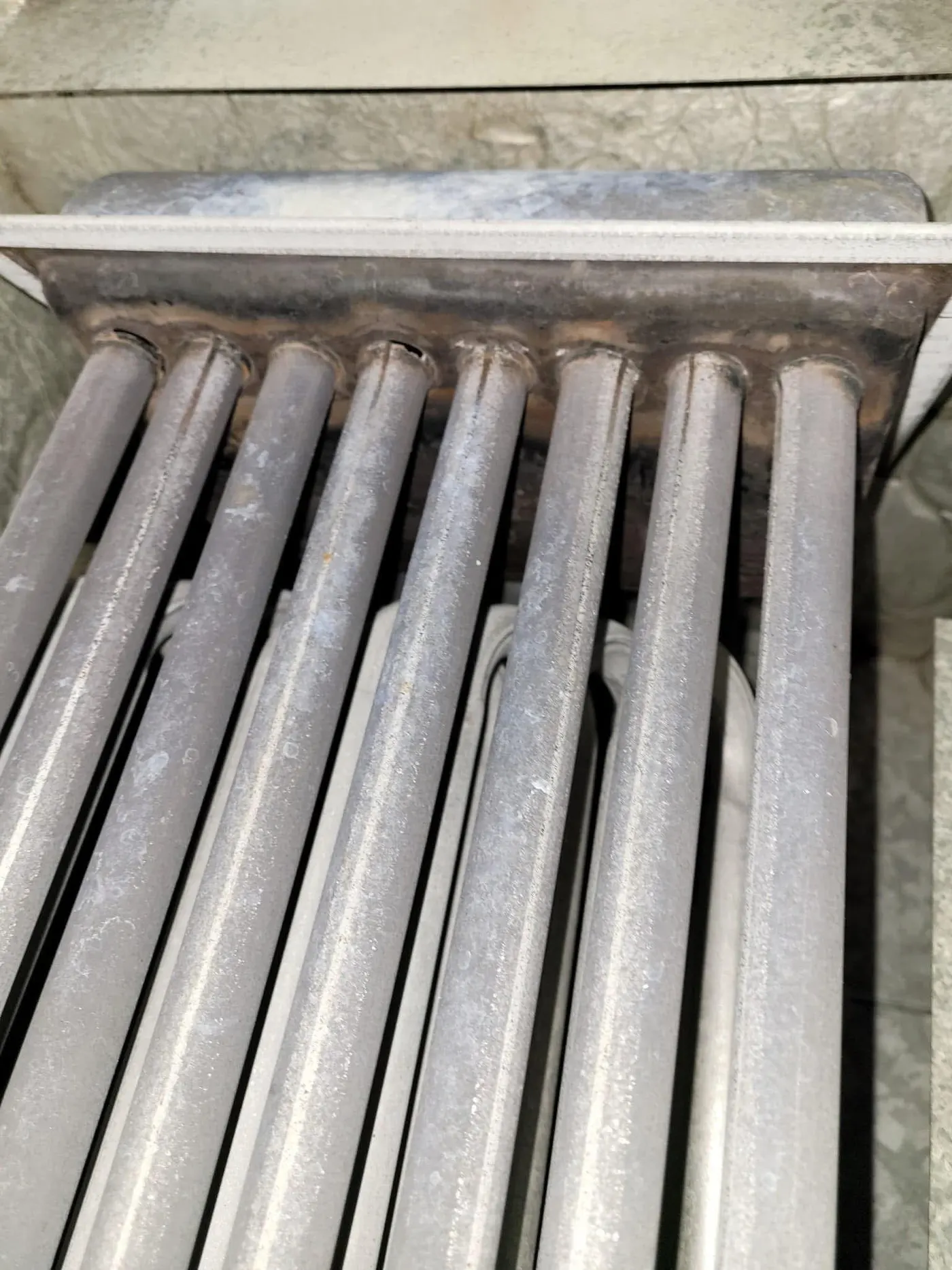
Our inspection is the same tune-up-level look we give our own customers' equipment, applied to a house you do not own yet. On the furnace: age from the serial number, heat exchanger inspection with a light and mirror and a combustion reading that reveals leakage, flame sensor and ignitor condition, inducer and venting, gas pressure, temperature rise, static pressure, filter sizing, and carbon monoxide at the registers. On the air conditioner, weather permitting: age, refrigerant type, capacitor and contactor condition, charge by superheat and subcooling, coil condition, temperature split, condensate drain and float switch, and the condenser pad and disconnect. On the water heater: age, tank condition, venting and draft, relief valve, anode where accessible, and signs of past leaks. On the ductwork: a walk of the basement, crawlspace and attic for disconnected runs, panned returns, missing insulation and the return sizing that drives most comfort complaints. Plus the thermostat, the humidifier if there is one, and the permit history if the township has it online.
The report is written for a buyer, not a technician. It tells you what each piece of equipment is, how old it is, what condition it is in, what it is likely to need and roughly when, and what we would do first if it were our house. It flags safety items separately, like a cracked heat exchanger, a water heater spilling flue gas or an AC disconnect wired wrong. It gives you what you need to negotiate a credit, ask for a repair, or walk away, and it becomes the baseline service history for the house if you buy it. We do not sell replacements off an inspection; if the equipment is old but sound, the report says so.
Timing is the practical part. Michigan purchase agreements typically allow a short inspection period, often a week to ten days, and the general home inspection eats part of that. We schedule pre-purchase inspections quickly inside our 20-mile radius, coordinate access with your agent or the listing agent, and get the report to you within a day of the visit so there is time to act on it. If the AC cannot be tested because it is 30 degrees outside, the report says what we could verify and what remains, and we tell you what to ask the seller for.
Pre-Purchase Inspection work we have photographed
Signs it is time to call
Inspection report says "recommend HVAC evaluation"
That line appears on most home inspection reports and means the inspector did not open the equipment. It is the cue to have a contractor actually do it.
Furnace or AC is more than 12 years old
Past that point the heat exchanger, compressor and coil are in the window where a failure is plausible, and the condition is worth knowing before you set your offer or your credit request.
Seller has no service records
No tune-up history means nobody has measured anything in years. The equipment may be fine; you just do not know, and neither do they.
House was a rental or a flip
Deferred maintenance is normal in rentals, and flips often get a new thermostat and a cleaned furnace cabinet in front of equipment that was never serviced.
Rooms felt uneven during the showing
A cold upstairs or a warm back bedroom in a quick walkthrough points to ductwork, and duct problems are not something a general inspector evaluates.
Furnace shares a chimney with the water heater, or does not
A high-efficiency furnace venting out the side wall with an atmospheric water heater left alone on the chimney is a common Southeast Michigan venting problem that inspectors miss.
You are waiving or shortening the inspection
In a competitive Ann Arbor or Saline bid, a focused HVAC inspection can be done fast and gives you the most expensive piece of information in the house even when the general inspection is abbreviated.
How the visit goes
Book inside the contingency window
Call or text with the address and the deadline. We coordinate access with your agent or the listing agent and schedule within days, often sooner.
Full equipment inspection on site
Furnace opened and tested with a combustion analyzer, AC tested under load when weather allows, water heater and venting checked, ductwork walked in the basement, attic and crawlspace.
Age, condition and permit history
Serial numbers decoded for manufacture dates, equipment matched against what the listing claims, and township permit records checked where they are available online.
Written report to you within a day
Plain-language findings for each system, safety items flagged separately, likely upcoming costs described, and what we would do first. Photos of what we found.
Call to walk through it
We go through the report with you by phone so you can decide what to ask the seller for. If you buy the house, the report becomes its service history with us.
What this covers
- Furnace age, model identification and heat exchanger inspection
- Combustion analysis and carbon monoxide reading at the registers
- Flame sensor, ignitor, inducer, pressure switch and limit operation
- Gas pressure, temperature rise and static pressure measurements
- Air conditioner age, refrigerant type and charge verification by superheat and subcooling
- Capacitor, contactor, condenser fan and compressor amp draw
- Evaporator coil, condensate drain, pan and float switch condition
- Water heater age, tank condition, venting, draft and relief valve
- Chimney and vent connector evaluation, including orphaned water heater flues
- Ductwork walk-through for disconnections, panned returns, insulation and return sizing
- Thermostat function and wiring, humidifier condition
- Electrical disconnect, breaker sizing and condenser pad condition
- Permit history check where township records are online
- Written buyer's report with photos, delivered within a day
How pricing works
A pre-purchase HVAC inspection is a flat price, quoted when you book, and it covers the full visit, the testing and the written report. It is priced as an inspection, not as a dispatch fee, because there is no repair to credit it toward on a house you do not yet own. If the weather prevents a full AC test, the price is the same and the report says what remains to be verified.
If you buy the house and want any of the items in the report addressed, those repairs are quoted flat-rate like any other job, and the inspection report serves as the starting diagnosis so there is no second trip fee for the same finding. Replacement estimates, if the report points that way, are free.
We schedule inspections to fit the contingency deadline, including evenings and weekends when that is what the access allows, at the same price.
From the people we have helped
★★★★★Temprasure is one of the best-managed companies I've ever come into contact with. Not only did Al do a great job but he did so in a timely manner. He worked as if it was his home in need. I would recommend him to anyone who has heating and cooling needs.
★★★★★Al & Co. came out and took very good care of me and my family. He showed up within an hour of me making contact and was able to diagnose and take care of the problem quickly and for reasonable pricing.
★★★★★Al is very polite and professional. Is willing to answer any questions you may have. I would recommend Temprasure to 10/10 people looking for HVAC work.
Questions we hear most
Doesn't the home inspector already check the HVAC?
Briefly. A general inspector confirms the furnace fires and the AC runs and notes the age if the label is readable. They do not open the furnace, inspect the heat exchanger, run combustion analysis or measure refrigerant charge. That is why their reports say to have a licensed HVAC contractor evaluate the system.
How quickly can you do the inspection?
Usually within a few days of your call inside our 20-mile radius, and faster when a contingency deadline requires it. Tell us the deadline when you book and we work backward from it.
Who gets the report?
You, the buyer. We send it to you and to your agent if you want. The seller does not receive it unless you share it.
Can you test the air conditioner in winter?
Not fully. Running a compressor below about 60 degrees outdoors risks damage and gives meaningless charge readings. In cold weather we inspect the condenser, coil, electrical components and age, and the report says what could not be verified so you can ask the seller for a credit or a spring test.
What happens if you find a cracked heat exchanger?
It is flagged as a safety item at the top of the report with the evidence, because it means the furnace needs replacement, not repair. That is a significant negotiating point and you should know it before closing.
Will you tell me what things will cost to fix?
The report describes what each item is likely to need and roughly how significant it is. If you buy the house and want firm numbers, we quote repairs flat-rate and replacements free, using the inspection as the diagnosis.
Do you inspect the water heater and ductwork too?
Yes. The water heater's age, tank condition and venting, and a walk of the accessible ductwork for disconnections, panned returns and return sizing are part of every inspection.
Is this useful on a new construction home?
Yes. Builder installs are often done fast, and a new system with a charge set by pressure only, a condensate trap never primed or ducts never sealed is a warranty conversation you want to have before the builder's walkthrough, not after.
What if I am waiving the inspection to compete?
We can often do a focused HVAC inspection quickly, sometimes during a second showing, so you at least know the condition of the most expensive equipment in the house. It is better than nothing and far better than a surprise.
New Home HVAC Inspection near you
Local pages for each community we serve, with the housing and equipment details that matter there.
- Pre-Purchase Inspection in Ypsilanti
- Pre-Purchase Inspection in Ypsilanti Township
- Pre-Purchase Inspection in Ann Arbor
- Pre-Purchase Inspection in Pittsfield Township
- Pre-Purchase Inspection in Superior Township
- Pre-Purchase Inspection in Saline
- Pre-Purchase Inspection in Dexter
- Pre-Purchase Inspection in Chelsea
- Pre-Purchase Inspection in Milan
- Pre-Purchase Inspection in Scio Township
- Pre-Purchase Inspection in Ann Arbor Township
- Pre-Purchase Inspection in Lodi Township
- Pre-Purchase Inspection in York Township
- Pre-Purchase Inspection in Augusta Township
- Pre-Purchase Inspection in Whittaker
- Pre-Purchase Inspection in Willis
- Pre-Purchase Inspection in Salem Township
- Pre-Purchase Inspection in Whitmore Lake
- Pre-Purchase Inspection in Canton
- Pre-Purchase Inspection in Belleville
- Pre-Purchase Inspection in Van Buren Township
- Pre-Purchase Inspection in Sumpter Township
- Pre-Purchase Inspection in Romulus
- Pre-Purchase Inspection in Westland
- Pre-Purchase Inspection in Wayne
- Pre-Purchase Inspection in Inkster
- Pre-Purchase Inspection in Garden City
- Pre-Purchase Inspection in Plymouth
- Pre-Purchase Inspection in Plymouth Township
- Pre-Purchase Inspection in Northville
- Pre-Purchase Inspection in Livonia
- Pre-Purchase Inspection in New Boston
- Pre-Purchase Inspection in Dundee
- Pre-Purchase Inspection in South Lyon
Related services
Read before you call
- Getting an HVAC Inspection Before Buying a Home in Washtenaw County
- How Long Do Furnaces Last in Michigan? Real Lifespans by Type and What Shortens Them
- How Long Do Air Conditioners Last in Michigan? Lifespan, Failure Points and the Replacement Decision
- Carbon Monoxide and Your Furnace: A Michigan Homeowner's Safety Guide
- HVAC Permits in Ypsilanti and Washtenaw County: When You Need One and Who Issues It
New Home HVAC Inspection, done right the first visit
Call or text (313) 701-9471 and tell us what the system is doing. We'll give you a real arrival window and a flat-rate quote before any work starts.